Advanced Elbow Treatments

Prof. Dr. Haluk Cabuk provides advanced elbow treatment in Istanbul, Turkey. He helps patients overcome pain, injuries, and mobility limitations caused by sports injuries, tendon disorders, and degenerative elbow conditions. From tennis elbow and ligament injuries to arthritis and elbow disorders, he develops personalized treatment plans tailored to each patient's needs using modern diagnostic and treatment techniques.

Elbow Pain Consultation
Elbow Anatomy
Know Your Elbow

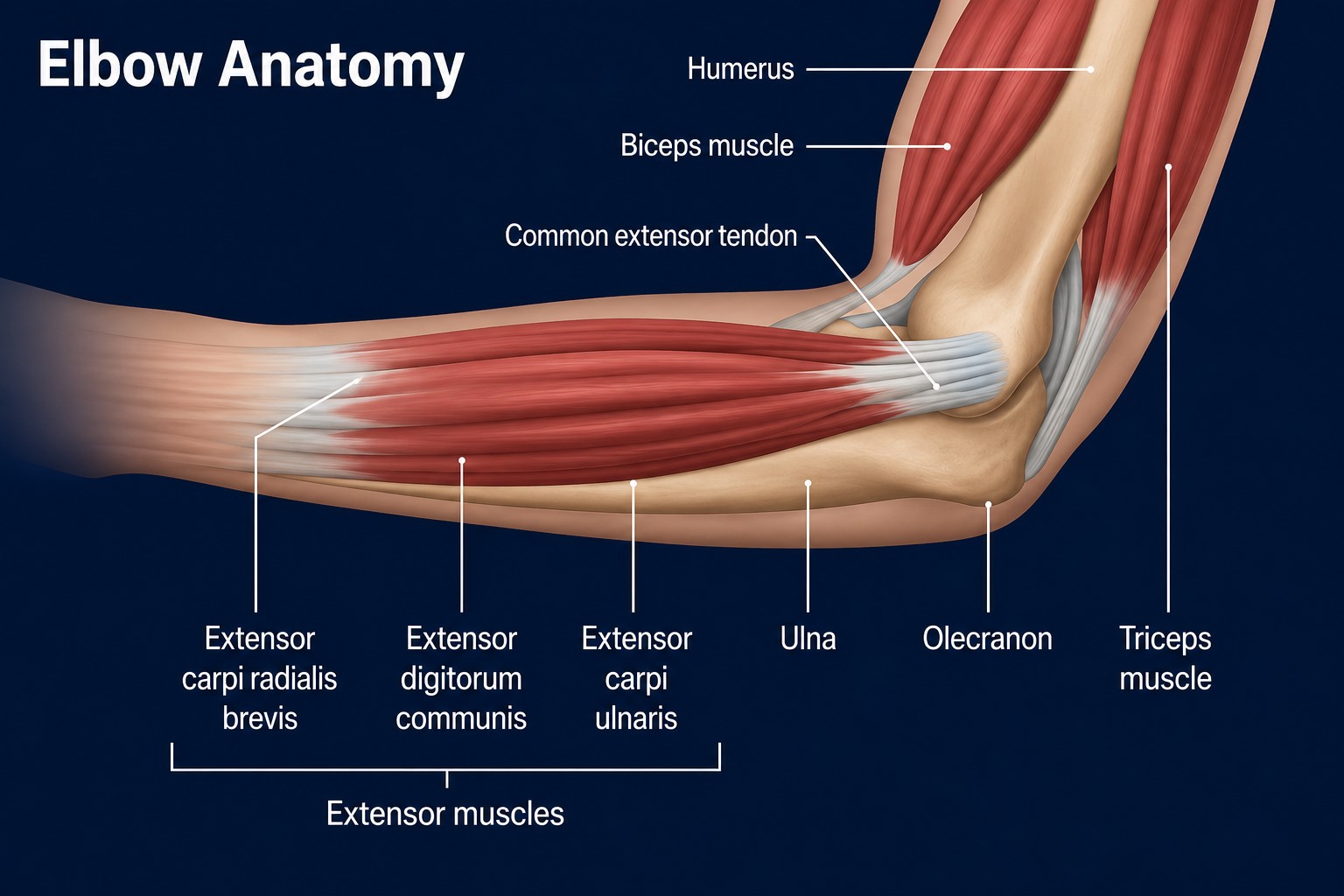
Elbow Anatomy

The elbow is a complex joint that connects the upper arm to the forearm, allowing bending, straightening, and rotational movements of the arm. It plays a vital role in lifting, gripping, throwing, and performing everyday activities.

The elbow is formed by three bones—the humerus (upper arm bone), radius, and ulna (forearm bones)—which work together with ligaments, tendons, cartilage, muscles, and nerves to provide stability, strength, and smooth movement.

Bones & Joints

The humerus, radius, and ulna form the elbow joint, enabling bending, straightening, and forearm rotation.

Ligaments

Strong ligaments stabilize the elbow and help maintain proper joint alignment during movement.

Tendons & Muscles

Tendons connect muscles to bone, allowing the elbow and forearm to generate strength and movement.

Nerves

Important nerves pass through the elbow, providing sensation and muscle control to the forearm and hand.


Treatments & Procedures

Prof. Dr. Haluk Cabuk provides comprehensive treatment options for elbow conditions, ranging from conservative care and rehabilitation to advanced minimally invasive and surgical procedures. He develops personalized treatment plans based on each patient's condition, activity level, lifestyle, and long-term goals to achieve the best possible outcomes.

What Our Patients Say About Prof. Dr. Haluk Cabuk

5.0 ★ from 125+ Google Reviews | 4.9 from 3,000+ cross-platform reviews

Ready to Start Your Recovery?

Book your appointment today — online or in person.

Frequently Asked Questions

Find answers to some of the most common questions about elbow pain, tendon injuries, nerve compression, fractures, arthritis, and orthopedic treatment options.

What are the most common causes of elbow pain?
Elbow pain can be caused by tennis elbow, golfer's elbow, tendonitis, arthritis, nerve compression, bursitis, fractures, ligament injuries, or repetitive overuse. An orthopedic evaluation can help identify the exact cause and determine the most appropriate treatment.
When should I see an orthopedic specialist for elbow pain?
You should consult an orthopedic specialist if elbow pain persists for more than a few days, limits your ability to perform daily activities, causes weakness or numbness, or develops after an injury. Early diagnosis can help prevent further complications.
What is tennis elbow?
Tennis elbow, also known as lateral epicondylitis, is a condition caused by overuse of the forearm muscles and tendons. It commonly results in pain and tenderness on the outer side of the elbow and can affect both athletes and non-athletes.
What is cubital tunnel syndrome?
Cubital tunnel syndrome occurs when the ulnar nerve becomes compressed or irritated as it passes through the elbow. Symptoms may include numbness, tingling, weakness, or pain that affects the ring finger, little finger, and hand.
When is elbow surgery recommended?
Elbow surgery may be recommended when non-surgical treatments fail to relieve symptoms or when significant tendon tears, fractures, instability, nerve compression, or advanced arthritis are present. Treatment recommendations are based on each patient's specific condition and functional needs.
How long does recovery take after elbow surgery?
Recovery time varies depending on the procedure performed and the severity of the condition. Some patients return to light activities within a few weeks, while more complex procedures may require several months of rehabilitation and strengthening exercises.
Information on Private Health Insurance
Coverage for consultations, diagnostic imaging, rehabilitation services, injections, and surgical procedures may vary depending on your private health insurance provider and policy. Please contact our team before your appointment to verify coverage details and obtain assistance regarding insurance-related questions or learn more.
Need Help?