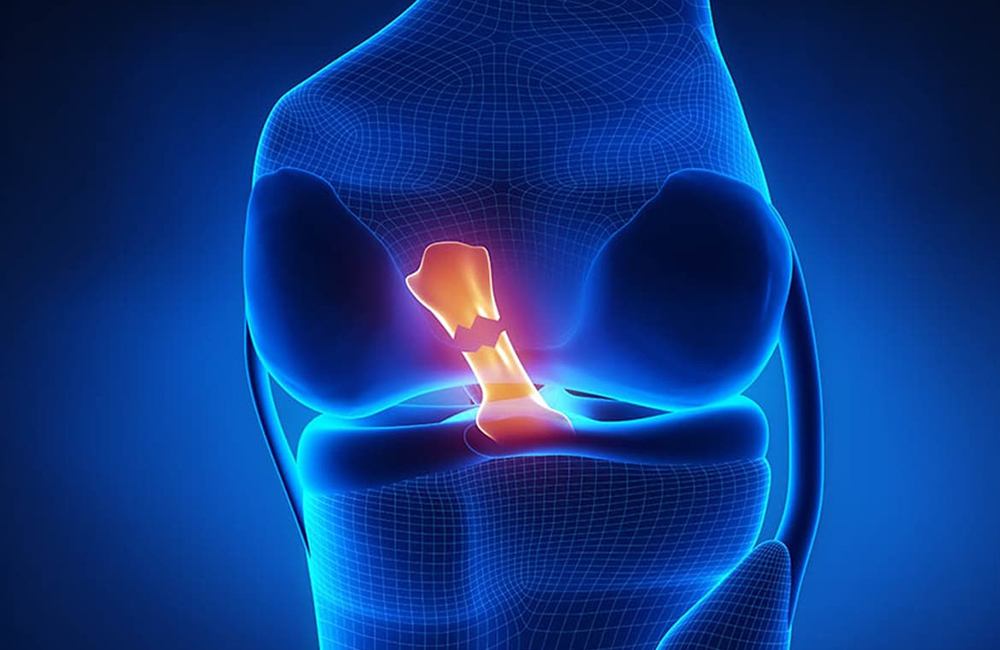
“My MRI Report Says I Have a Meniscus Tear. Do I Need Surgery?”
This is a question I hear almost every week. And most of the time my answer surprises patients:
No. Not every meniscus tear requires surgery.
When people hear the phrase “meniscus tear,” surgery often immediately comes to mind. In reality, this is an old habit. Today we know that treatment decisions should not be made solely by looking at MRI images. The most important factor is the patient’s complaints and the clinical condition of the knee.
What Is the Meniscus and Why Is It Important?
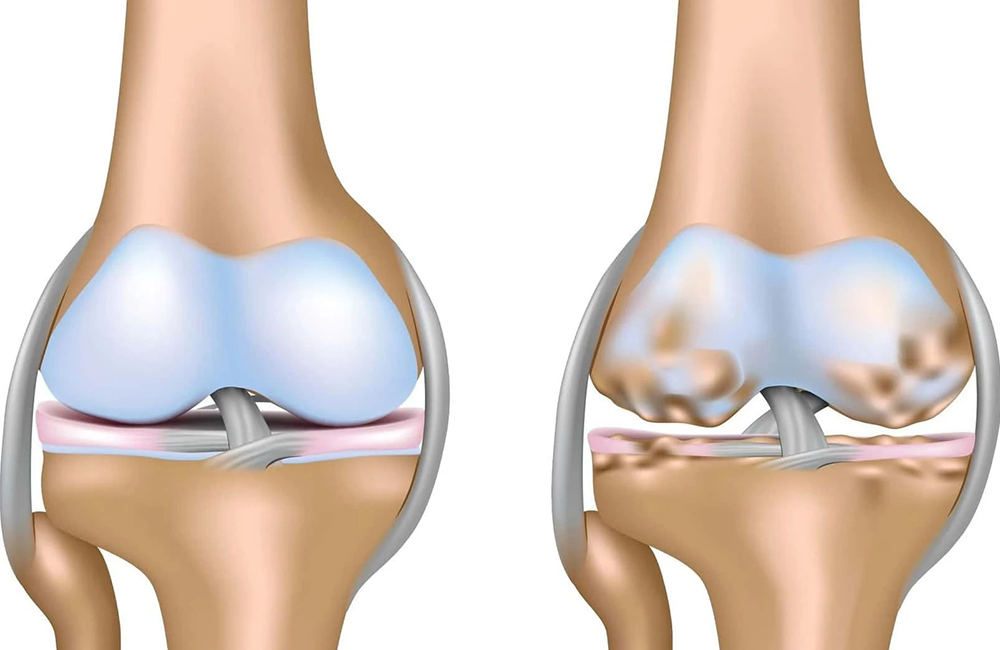
The menisci are two crescent-shaped cartilage structures located inside the knee joint. They function like a cushion between the femur (thigh bone) and the tibia (shin bone).
Functions of the Meniscus
- Distributing the load placed on the knee
- Acting as a shock absorber
- Protecting the joint surfaces
- Contributing to knee stability
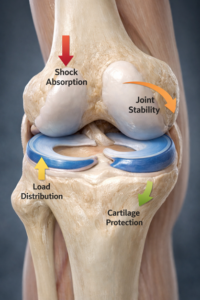
When the meniscus is healthy, it protects the cartilage of the knee. However, when it is severely damaged or when a significant portion is removed, the risk of knee osteoarthritis may increase in the long term. For this reason, the fundamental principle today is to preserve the meniscus whenever possible.
Are All Meniscus Tears the Same?
Meniscus tears are generally divided into two main groups.
1. Traumatic Tears
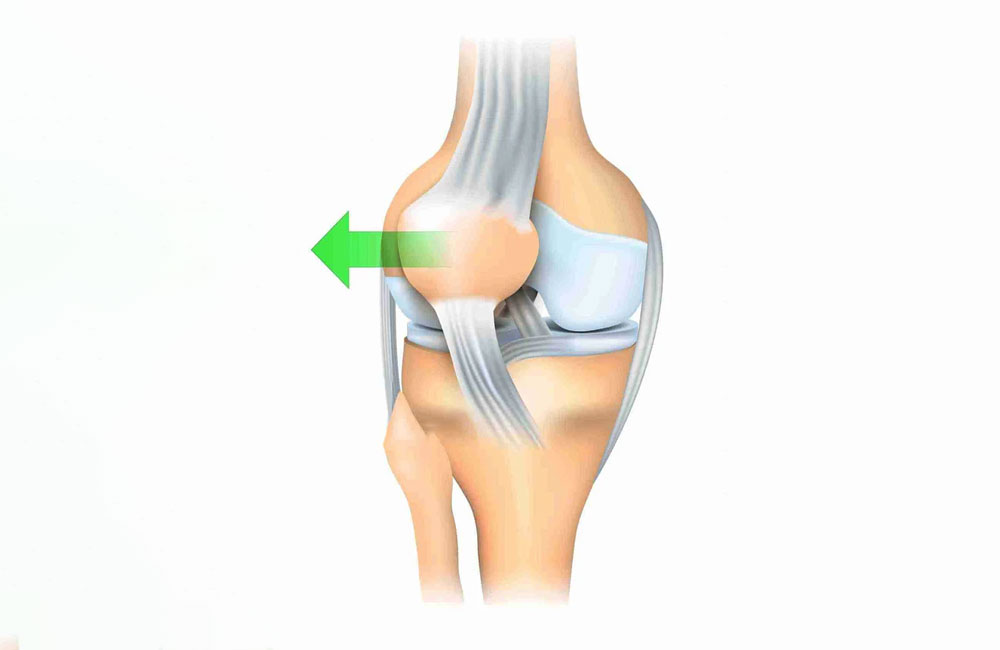
These are usually seen in young and active individuals. They can occur during sports with sudden twisting movements, squatting, or after contact injuries. The tear pattern is usually clearer and may sometimes cause catching or locking in the knee.
2. Degenerative (Age-Related) Tears
These are more common after the age of 40. Often there is no clear trauma history. They may coexist with knee osteoarthritis. A tear may appear on MRI, but the meniscus is not always the only cause of pain.
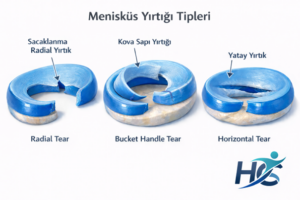
The key question: Is the tear causing the pain, or is another problem in the knee responsible?
When Is Surgery Not Necessary?
In many cases, non-surgical treatment is preferred, especially in the following situations:
- No locking in the knee
- Pain is manageable
- Daily activities can continue
- The tear is small and degenerative
Non-Surgical Treatment Options
- Exercise programs to strengthen thigh muscles
- Physical therapy
- Weight control
- Activity modification
- Injection treatments if necessary
Many scientific studies show that for degenerative meniscus tears, there is no significant long-term difference between surgery and physical therapy. Therefore, seeing a tear on MRI does not automatically mean surgery.
When Should Meniscus Surgery Be Considered?
In some situations, surgery may truly be necessary.
Knee Locking
If the knee cannot fully bend or extend and there is a mechanical blockage inside the joint, a torn fragment may be trapped in the joint.
Young and Active Patients
Large full-thickness tears, especially in athletes, may be more suitable for surgical repair.
Persistent Pain
If there is no clear improvement despite appropriate conservative treatment, surgical options may be evaluated.
Associated Ligament Injuries
For example, if a meniscus tear occurs together with an anterior cruciate ligament (ACL) rupture, both may be treated during the same surgery.
Types of Meniscus Surgery
Meniscus surgeries are generally performed arthroscopically (minimally invasive surgery). Small incisions are made in the knee, and a camera and thin surgical instruments are inserted.
Meniscus Repair
The torn meniscus is stitched together. This is preferred especially in young patients and in suitable tear types. Recovery takes longer, but it is more beneficial for long-term knee health.
Partial Meniscectomy
Only the damaged portion of the meniscus is removed. Recovery is faster, but long-term monitoring is important because meniscus tissue decreases.
The modern approach prioritizes preserving the meniscus whenever possible.
We Treat the Patient, Not the MRI
MRI images alone do not determine treatment.
Sometimes a tear that appears severe on MRI causes no symptoms.
Sometimes a small tear may cause significant complaints.
Factors Considered in Treatment Decisions
- Patient age
- Activity level
- Duration of symptoms
- Knee examination findings
- Cartilage condition
Therefore, the belief that “If there is a tear on MRI, surgery is necessary immediately” is incorrect.
If I Don’t Have Surgery, Will My Knee Get Worse?
This is another common concern.
In degenerative and small tears, avoiding surgery usually does not worsen the knee condition. Some studies even suggest that unnecessary meniscus trimming may increase cartilage wear over time.
However, large and unstable tears causing mechanical locking may lead to further damage if left untreated.
In other words, treatment decisions must be individualized.
Conclusion: There Is No Single Correct Answer
Not every meniscus tear requires surgery.
But not every tear should be ignored either.
The best approach is to evaluate:
- Imaging findings
- Clinical examination
- Patient expectations
If you have a meniscus tear, the healthiest step is to undergo a detailed orthopedic evaluation before making a decision. Treatment planning should be based not only on the MRI report but on the actual condition and needs of your knee.